In late 2021, headlines screamed stories of pixelated punks selling for millions, digital monkeys becoming status symbols, and overnight millionaires minted on the blockchain. NFTs—Non-Fungible Tokens—burst into the mainstream consciousness with the force of a cultural shockwave. To some, they represented the future of ownership. To others, a speculative bubble wrapped in hype.
But years later, after booms, busts, rug pulls, and reinventions, the core question remains more relevant—and more complex—than ever:
Are NFTs actually a good investment?
The honest answer is not a simple yes or no. NFTs sit at the intersection of technology, culture, finance, and psychology. Understanding whether they are a sound investment requires digging beneath the hype and confronting the risks, assumptions, and realities that define this young asset class.
This article does exactly that.
Understanding NFTs Beyond the Buzzwords
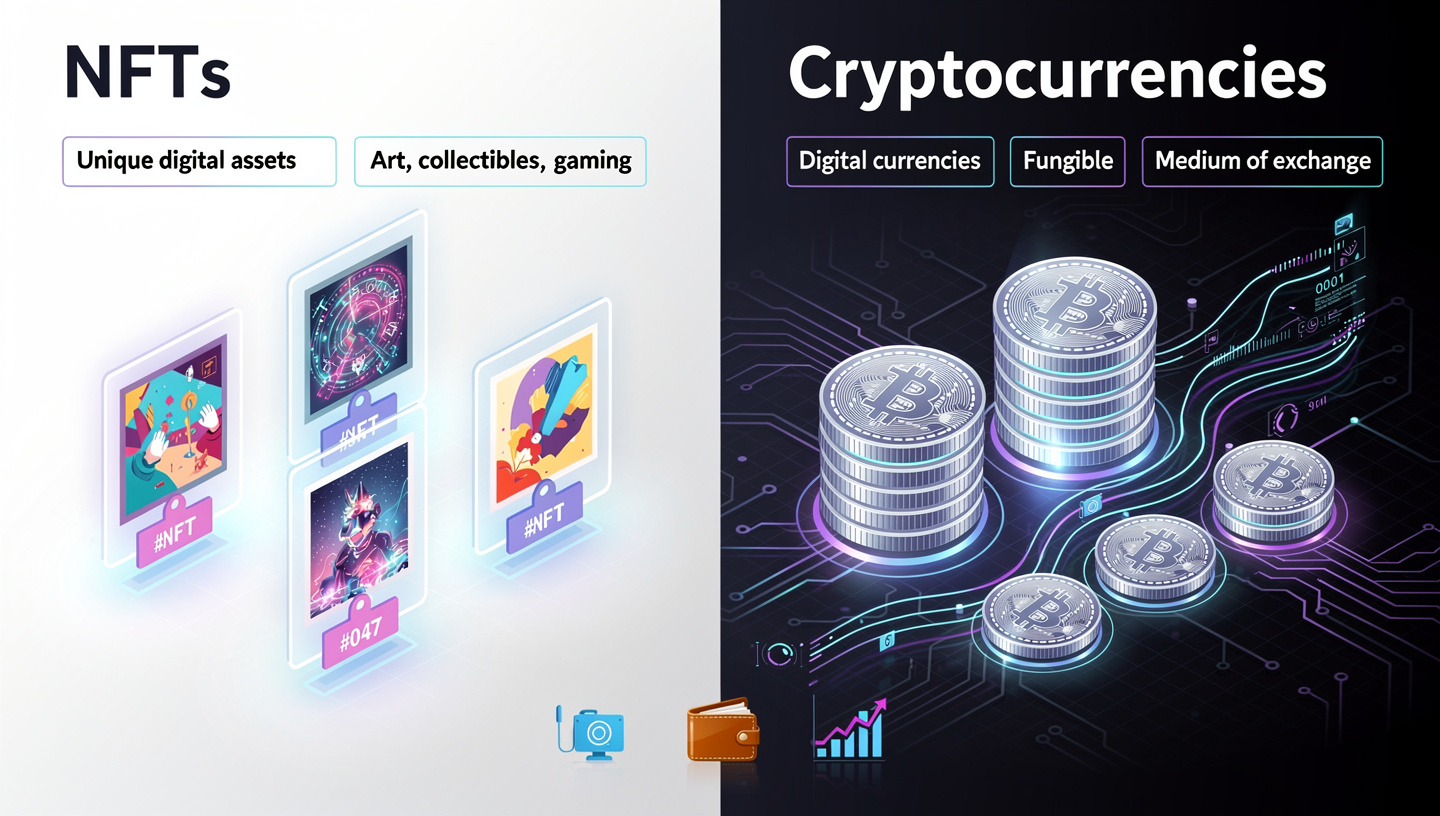
At their core, NFTs are unique digital tokens recorded on a blockchain. Unlike cryptocurrencies such as Bitcoin or Ethereum—which are interchangeable—each NFT represents something distinct. That “something” might be digital art, a music track, a video clip, a game item, a domain name, or even a claim to real-world assets.
But here’s a crucial distinction many investors miss:
An NFT does not automatically equal value.
An NFT is a container, not the content itself. The value comes from what the token represents, how it’s used, and—most importantly—what people believe it’s worth.
This belief-driven nature makes NFTs fundamentally different from traditional investments.
Why People Believe NFTs Can Be a Good Investment
1. Digital Scarcity in an Infinite World
The internet made copying effortless. NFTs introduced a way to enforce scarcity in digital spaces.
When scarcity meets demand—especially cultural demand—prices can rise dramatically. This mirrors how collectibles have always worked, from rare stamps to vintage sneakers.
NFTs simply moved that logic online.
2. Cultural Value Can Translate Into Financial Value
Some NFTs function less like stocks and more like cultural artifacts.
Early collections such as CryptoPunks or Bored Ape Yacht Club gained value not because of cash flows or dividends, but because they became symbols of identity, status, and belonging within digital-native communities.
In this sense, NFTs resemble art, fashion, or music investments—assets whose value is shaped by taste, narrative, and social consensus.
3. New Utility Models Are Emerging
The NFT space is no longer just about images.
Modern NFTs may offer:
- Access to exclusive communities
- Revenue-sharing mechanisms
- In-game functionality
- Event tickets
- Intellectual property rights
- Staking rewards
- Membership passes
When NFTs deliver ongoing utility, they begin to resemble digital businesses rather than static collectibles.
4. Early-Stage Innovation Can Mean Outsized Returns
NFTs are still a relatively young market. Early-stage technologies often produce asymmetric outcomes—most projects fail, but a few generate enormous returns.
For investors with high risk tolerance, NFTs offer exposure to:
- Web3 infrastructure
- Creator economies
- Metaverse platforms
- Digital identity systems
In theory, this creates opportunities unavailable in traditional markets.
The Dark Side: Risks That Cannot Be Ignored
While the upside narratives are compelling, the risks are real—and often underestimated.
1. Extreme Volatility
NFT prices can skyrocket and collapse within days.
Unlike stocks, NFTs often lack:
- Transparent valuation models
- Consistent liquidity
- Fundamental benchmarks
This means prices are driven largely by sentiment, momentum, and narratives. When attention shifts, liquidity can disappear instantly.
An NFT worth $50,000 today may struggle to sell for $5,000 tomorrow—if it sells at all.
2. Liquidity Is an Illusion
Seeing high “floor prices” on marketplaces can be misleading.
Liquidity depends on:
- Active buyers
- Market sentiment
- Platform health
- Network fees
In downturns, NFTs become notoriously hard to sell. There is no guarantee you’ll find a buyer when you need one—especially at your desired price.
3. Most NFTs Will Likely Go to Zero
This is uncomfortable but necessary to say.
History suggests that:
- Most art movements fade
- Most collectibles lose relevance
- Most early internet projects disappear
NFTs are no different.
For every iconic collection, there are thousands of forgotten ones. The majority of NFTs minted will likely never recover their initial value.
4. Legal and Regulatory Uncertainty
NFT ownership is often misunderstood.
In many cases:
- You do not own copyright
- Rights are poorly defined
- Terms can change
- Projects can vanish overnight
On top of that, governments around the world are still figuring out how to regulate NFTs—especially those that resemble securities.
Future regulation could dramatically reshape the market.
5. Technological and Platform Risk
NFTs depend on:
- Blockchains
- Marketplaces
- Smart contracts
- Hosting services
If any of these fail, are hacked, or become obsolete, the NFT’s value may suffer.
Some NFTs technically still exist on-chain, but their associated images or metadata can disappear if stored improperly.
6. Psychological Traps and Herd Mentality
NFT investing often blurs the line between rational decision-making and emotional speculation.
Common traps include:
- FOMO (fear of missing out)
- Overconfidence during bull markets
- Anchoring to past prices
- Believing hype without verification
Because NFTs are deeply social, investors are especially vulnerable to groupthink.
NFTs vs Traditional Investments: A Reality Check
NFTs differ fundamentally from stocks, bonds, or real estate.
| Aspect | Traditional Assets | NFTs |
|---|---|---|
| Cash Flow | Often yes | Usually no |
| Valuation Models | Established | Mostly speculative |
| Regulation | Mature | Evolving |
| Liquidity | Predictable | Highly variable |
| Risk Profile | Measurable | Asymmetric and extreme |
This doesn’t mean NFTs are inferior—but it does mean they require a different mindset.
How to Approach NFTs as an Investor (Not a Gambler)
If you are considering NFTs as part of your investment strategy, discipline matters more than enthusiasm.
1. Invest Only What You Can Afford to Lose
This rule is not optional.
NFTs should represent a small, speculative portion of a diversified portfolio—not your financial foundation.
2. Focus on Quality Over Quantity
Ask tough questions:
- Does this project have long-term vision?
- Is there real utility or just hype?
- Is the community organic or artificially inflated?
- Who is behind the project—and can they execute?
3. Understand the Narrative You’re Buying Into
Every NFT investment is a bet on a story.
Make sure you understand:
- Why it exists
- Who cares about it
- What problem it solves—or what emotion it taps into
If you can’t explain its value in one clear sentence, reconsider.
4. Prepare for Long Holding Periods—or Total Loss
NFTs are rarely suitable for short-term financial planning.
You must be comfortable with:
- Illiquidity
- Long time horizons
- The possibility of permanent loss
So… Are NFTs a Good Investment?
NFTs are not inherently good or bad investments.
They are:
- High-risk
- Narrative-driven
- Culture-dependent
- Technologically experimental
For some, NFTs represent a meaningful way to invest in digital culture and emerging technology. For others, they are a speculative distraction best avoided.
The real danger is not NFTs themselves—but misunderstanding what they are.
If you treat NFTs like guaranteed financial instruments, you will likely be disappointed.
If you approach them as speculative assets tied to creativity, community, and innovation, with eyes wide open to the risks, they can make sense within a broader strategy.
In the end, the most valuable investment you can make in the NFT space isn’t a token.
It’s knowledge, skepticism, and patience.